Thursday, 4 April 2013

Dune


It is common knowledge that most of the Earth's surface is covered by water; around two thirds of it, if memory serves me correctly. Granted, most of that is oceans and salt water, and therefore not fit to drink. But we still have enough fresh water to sustain the nearly ten billion people that inhabit our planet.

Now, imagine a planet where the opposite proves to be true. A desert planet named Arrakis, where the most precious resource in the known galaxy is produced. Frank Herbert's Dune is the first book in the eponymous series that paints a picture of life on such a planet, and a book considered by many to be one of the greatest science fiction novels of all time.

The story opens with the arrival of the members of House Atreides - Duke Leto Atreides; his wife, Lady Jessica; and their son, Paul Atreides - who have left the comfort of their own planet for Arrakis. They've come to take over and oversee the production of the aforementioned resource, a mind-enhancing spice known as melange. But unknown to them, their appointment has been orchestrated to foster some underhand politics.

It doesn't take long before an attack by a rival House disrupts their fledgling administration. Duke Leto is captured, while Paul Atreides and Lady Jessica are forced to seek shelter with the Fremen, a group of desert dwellers. And it is there that Paul must continue to develop his mental abilities, while preparing for a day when he would be able to exact his revenge on the evil Baron Harkonnen.

The above summary doesn't even begin to do the depth of this book any real justice. Its pages are practically teeming with details great and small. Like the giant sandworms that hunt their prey based on how much noise their footsteps make. Or the special suits the Fremen wear to retain as much bodily fluids as possible. The world is so rich that a glossary of terms is needed (and included at the back) just to keep track of everything.

And therein lies my only problem with this science-fiction classic. The constant need to look up terms like Bene Gesserit and Lisan al-Gaib. Add that to the book's doorstopper length and a minor annoyance suddenly becomes a major concern. But I guess it is all required to create a world every bit as vivid as J.R.R. Tolkien's Middle-Earth.

Wednesday, 3 April 2013

The Chronicles of Narnia


The Chronicles of Narnia mean different things to different people. It is considered an allegorical retelling of the Christian story on one hand. It is also considered a vehicle for "soft-sell paganism and occultism," mainly due to its magical themes. But regardless of which side of the fence you've chosen to fall, there is little doubt that The Chronicles are seven of the most beloved children/fantasy books.

Published between 1950 and 1956, each book follows the adventures of several children in a magical world called Narnia. Over the course of the entire series, we get to learn more about that world and its inhabitants. It is a world that exists parallel to ours, where men and talking beasts coexist. And from the very first book, the reader is transported there, and made to care about its fate as their actions shape its future.

There is much debate concerning the order in which the books should be read i.e. in publication order or chronological order. I am one of those who prefer to read them in publication order, simply because The Lion, the Witch and the Wardrobe is such a good place to start. It did a decent job of introducing Narnia and characters like the White Witch and the Christ-like lion, Aslan.

That said, my favorite book in the series is actually The Magician's Nephew (#1 in chronological order), primarily because my experience with it was influenced by the buildup from the five books before it. I can't even imagine how my favorite character, the White Witch (or Jadis as she is known here), would have come across, had her villainous ways not already been introduced in the first book.

But there is little doubt I would still consider her "a dem fine woman." I wonder what that says about me as a person.

Tuesday, 2 April 2013

Battle Royale


Before The Hunger Games, there was this other book called... okay, okay. I'm sure most of you must have heard this fact restated at least a thousand times by now. So I'll try my best not to let it overshadow the rest of today's post.

In Koushun Takami's Battle Royale, a group of junior high school students are kidnapped during an excursion. They awaken following a gas-induced sleep to find themselves on a remote island, where they learn they must battle one another in true gladiator style, until there is only one boy or girl left standing. It is all part of a government-funded program called (you guessed it) the Program, which was designed to instill fear into the minds of the general public, and by so doing prevent all thoughts of rebellion.

Ahem. I know I said I wasn't going to make any more references to The Hunger Games. But jeez louise, could the basic concept behind both books be any more alike if it tried? I mean, just reading the above synopsis over again and I find myself trying to remember which of the two books I am talking about here. But while both books share the same general idea, it is in the execution of that idea that each finds its respective audience.

The general word on the street is that The Hunger Games is a watered down version of Battle Royale, much the same way that Twilight is regarded when compared to Anne Rice's vampire books. Also, unlike Hunger Games, which was clearly set in a post-apocalyptic version of America known as Panam, Battle Royale takes place in an alternative reality, wherein Japan is part of "an authoritarian state known as the Republic of Greater East Asia."

Following its publication in 1999, it didn't take long before Battle Royale was adapted into a movie of the same name (2000). Since then, both the book and movie have managed to find a somewhat cult following, despite being heavily criticized for its subject matter and depiction of violence.

Monday, 1 April 2013

Alice's Adventures in Wonderland


Today marks the beginning of the 2013 Blogging from A-Z Challenge. Throughout the month of April, participants would be blogging their way through the letters of the alphabet. My theme for this year's challenge is speculative fiction books, so I'll be highlighting some of my favorite science fiction, fantasy and horror books, all month long. And what better way to start than with one of the most influential fantasy books ever written: Alice's Adventures in Wonderland.

Originally published in 1865, the book tells the story of a little girl named Alice, who follows a strange white rabbit (on an otherwise ordinary day) to Wonderland, a fantasy world inhabited by talking animals. It is a dreamlike tale that is really just (as the title suggests) a collection of loosely-connected adventures. Most of it involves Alice trying to figure out a way to solve one problem or the other, and their resolutions tend to be just as ludicrous as the problems themselves, if not more so.

One of the things that has endeared this book to readers for nearly 150 years is its cast of quirky and unforgettable characters. From Alice's childlike curiosity, to the Cheshire Cat's fading grin, and the Queen of Heart's tendency to pronounce on-the-spot decapitations; it is these characters that truly make this otherwise nonsensical story a worthwhile read for children and adults alike.

Alice in Wonderland has been repeatedly adapted into film, the two most popular adaptations being the 1951 Disney animated classic and the more recent Tim Burton version (2010). It has also influenced a string of other books (not to mention films like The Matrix and Sucker Punch), a few of which I would be highlighting in the days to come.

P.S: A special shout out goes to Arlee Bird, who started the Blogging from A-Z challenge in 2010. Thanks, Mr. Bird, for helping so many people in the blogging communities find one another.

Wednesday, 27 March 2013

"Blog Not Found"


I doubt if anybody noticed, but my entire blog went missing for the better part of last week. One moment I was checking my email on my mobile phone, the next I was locked out of my Google account, due to what they termed suspicious activity. I immediately tried to view my blog, only to be greeted by a heart-warming "Blog not found" message.

I've only been blogging for about a year and a half now, but needless to say, I wasn't exactly keen on watching all that time circle down the drain.

The first thing I did after getting the message (aside from panic of course) was to google around for a solution. At least I wasn't locked out of their search engine. And it didn't take very long before I realized my problem wasn't unique. The general concessus was that it would eventually sort itself out.

So I basically had to log in from a PC and do an account verification (the same kind you do over the phone when creating a new account) in order to regain access to my Google account. Then I had to play the waiting game. Each time I tried to view my blog and I received that dreaded message (about a hundred times in all) was like a slap in the face.

But just like magic, I tried viewing it sometime on Friday, and there it was, as though it never went missing in the first place. It has been back ever since.

The whole experience has got me thinking about putting something as important as my author platform in the hands of a third party. I mean, what would happen if they decided to close up shop one day?

Have any of you ever experienced anything like this before? If so, what can you do to prevent it from happening again?

Monday, 18 March 2013

Top Ten Movie Countdown Blogfest


It's been a while since I participated in a blogfest, and there's no better way to prepare for next month's A-Z challenge. So today, I am doing the Top Ten Movie Countdown Blogfest, hosted by the ninja captain himself, Alex J. Cavanaugh. Participants are expected to list/count down their Top 10 movies. Mine are as follows:

10. Drive (2011)


I must admit, I was a wee bit skeptical going into Drive. This was due in part to my experience with director Nicolas Winding Refn's previous movie, Valhalla Rising. But the same deliberate pacing that made Valhalla Rising a barely-watchable snorefest works beautifully in Drive, largely because of its 80s-inspired soundtrack and atmosphere.

9. Superbad (2007)


Following in the footsteps of American Pie, Superbad tells the story of a group of teenage boys hoping to get laid before getting shipped off to college. Highly original, I know. But what sets it apart is a number of geniune, laugh-out-loud moments that stick with you long after the credits roll.

8. Dawn of the Dead (2004)


This movie excels as not only a horror film, but as a decent action film too (unlike the recent string of Resident Evil movies, which fails at both). I especially love the way the zombie apocalypse is introduced in the beginning, and how the tension surrounding the survivors continues to build until the very end.

7. Scarface (1983)


Scarface caused quite the stir following its original release. It easily pushed the boundaries of what was considered acceptable in terms of violence and profanity (even though most of it would be considered tame by today's standards). So in a way, Brian De Palmer effectively paved the way for directors like Quentin Tarantino and Robert Rodriguez.

6. Inception (2010)


Inception fell just shy of becoming my favorite science-fiction movie of all time. But Christopher Nolan's tale of a near future where ideas can be extracted through shared dreams very much deserves a place on any Top 10 list. Rarely is a sci-fi movie executed with as much precision. The result (as a friend of mine would put it) is a 2 hours 30 minutes movie that feels more like 1 hour 30 minutes.

5. Pan's Labyrinth (2006)


In this dark fantasy movie, Guillermo Del Toro paints a portrait of the world as seen through the eyes of a 12-year-old girl. I've always loved the director's visual style since movies like Hellboy and Mimic, but never has that vision been as fully realized as it was here. A visually striking work of art that belongs alongside the Mona Lisas of the world.

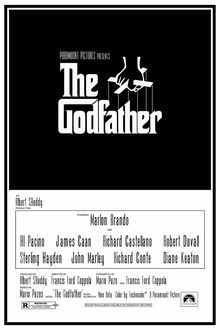
4. The Godfather (1972)


If ever there was a movie that lived up to its reputation, then surely that movie must be The Godfather. It is one of those rare gems that manages to do its source material justice, a book I recently had the pleasure of reading. It is every bit a movie about family values as it is about organized crime, and we get to watch a reluctant (and quite young) Al Pacino step into his career-defining role.

3. Inglourious Basterds (2009)


I love a good revenge story as much as the next man. So from the moment I heard about Quentin Tarantino's take on the fall of the Third Reich, I was immediately sold. Only someone like Tarantino could set what is essentially a sphagetti western in Nazi-occupied France, and make it work.

2. The Matrix (1999)


Once upon a time, a pair of little known filmmakers envisioned a movie that would not only raise the bar for special effects, but tell an awesome story too. It's anybody's guess why the Wachowskis have been unable to replicate the success of The Matrix ever since, but there is no denying that what they left us with is a landmark science-fiction movie.

1. The Lord of the Rings: The Return of the King (2003)


The final part of Peter Jackson's the Lord of the Rings is also my favorite movie of all time (till date). There's a reason why it won all 11 academy awards back in 2004. Put simply, The Return of the King (and the trilogy as a whole) is not just a movie, it is an experience.

I can't help but wonder whether the current trilogy of Hobbit movies has any hope of finishing anywhere near as strong. Only time would tell I guess.

Wednesday, 6 March 2013

IWSG: The 2013 A-Z Challenge


It's the first Wednesday of a new month, which means it's time for another round of IWSG postings. The IWSG was started by Alex J. Cavanaugh, where members can share their writerly insecurities with one another, and also offer some much needed encouragement.

I received my very first form rejection this past weekend. It wasn't from an agent or a traditional publisher as you might expect, but from Amazon Publishing. I'd submitted a short story to their Kindle Singles program, an exclusive listing reserved for shorter works i.e. short story, novellas etc. It was a spur of the moment decision, and in retrospect, I guess it was a long shot, since the program favors non-fiction. And of the seventy-something fiction titles currently listed, most (if not all) of them appear to be works of literary fiction.

Still, it was an avenue worth exploring, and I can at least say that I gave it a shot. Now I can get back to my current project, and also start scheduling my posts for the Blogging from A-Z Challenge next month.

That's right, I finally signed up for the challenge, even though I wasn't going to until I'd written a good number of my posts beforehand. Right now, I only have a vague idea of some of the 26 books I'd be highlighting for the challenge. I would ideally love to stick with books under the speculative fiction umbrella, since that is what I love to read and write. Hopefully, the challenge wouldn't take away too much time from my current project, another reason why I need to start scheduling those posts. I'd better get to it then.

What about you? Are you doing the 2013 A-Z Challenge? And if so, are you going with a theme?

Monday, 25 February 2013

The 85th Academy Awards


The 2013 Oscars have come and gone apparently. And while I didn't watch the actual ceremony, I followed the media coverage surrounding it with keen interest. It is also worth noting that out of the 10 Best Picture nominees, the only one I'd seen prior to the Oscars was Quentin Tarantino's Django Unchained, one of my favorite movies of the moment.

But I guess that's what these awards ceremonies are there for, to highlight the cream of the crop and give those of us who'd missed out on their greatness a reason to go back and revisit them.

Let's begin with some raw numbers.

Going into the ceremony, the movie that had the most nominations was Spielberg's Lincoln (12 nominations). It was closely followed by Life of Pi (11 nominations); Les Misérables and Silver Linings Playbook (8 nomination each); Argo (7 nominations); then of course Django Unchained, Skyfall, Zero Dark Thirty and Armor (5 nominations each).

By the end of the night though, the big winners were Life of Pi (4 awards); Argo and Les Misérables (3 awards apiece); then Django Unchained, Lincoln and Skyfall (2 awards each).

The first award of the evening went to Christoph Waltz for Best Supporting Actor (Django Unchained). Quentin Tarantino also won for Best Original Screenplay (Django Unchained), his second win in that category since he won for Pulp Fiction (1994). On the technical side, Life of Pi won for both Best Visual Effects and Best Cinematography, much like Hugo did last year.

Best Actor went to Daniel Day-Lewis for his performance in Lincoln (surprise, surprise), while Jennifer Lawrence took home the award for Best Actress, for her role in Silver Linings Playbook. Equally predictable was Adele's win for Best Original Song (Skyfall), an award she shares with the very talented Paul Epworth.

Somewhat surprising though was Brave's win for the Best Animated Film award, over the much-better-received Wreck-It Ralph. Maybe it is just the gamer inside of me that's complaining. I am yet to sit through either movie, so I guess whatever opinion I might have is highly irrelevant.

Rounding off the ceremony were the most important categories: Best Director and Best Picture. Ang Lee won his second Best Director award for Life of Pi, while Ben Affleck finally got some much deserved recognition, winning the overall Best Picture award for Argo.

So there you have it. The breakdown. Needless to say, the two movies at the top of my must-see list right now are Argo and Life of Pi. What about you? What Oscar movies did you miss out on and would most likely go back to see?

Monday, 11 February 2013

My Thoughts on the 55th Grammy Awards


So I finally managed to crawl out of bed today, having stayed up all night watching The Grammys. I was pretty excited about watching this year's awards for two main reasons. First off, my favorite band of the moment, fun., was up for a total of six nominations (including four big ones). Secondly, there were a string of high-profile performances from the likes of Taylor Swift, Bruno Mars, Rihanna and the aforementioned band to look forward to.

But of course, it is usually the low-profile performances that end up stealing the show. Lady Antebellum did it in 2010. The Civil Wars did it last year. This time around it was Miguel's time to shine, who was joined by Wiz Khalifa for a performance of his break-out single, "Adorn." Another standout performance was Carrie Underwood's, wherein her dress was overlayed with digital images to mesmerizing effects. In the same vein, Frank Ocean gave a technically-impressive performance of his highly-controversial song, "Forest Gump."

Unlike last year, where Adele swept all the major categories, there weren't really any clean sweeps this time around (except Skrillex, who won all the electronic categories for a second year in a row). fun. took home the Song of the Year award (in addition to Best New Artist), for the song, "We Are Young" and Gotye (with Kimbra) won the Record of the Year award for "Somebody That I Used To Know."

The Black Keys won most of the Rock categories, but lost out on Album of the Year to the British indie/folk band, Mumford & Sons, who took home the night's top honor for their sophomore album, Babel. This would mark the second year in a row where a British act took home that award (last year it was Adele's 21). And while I wished it had gone to The Black Keys (or dare I say fun.), I really can't say I didn't see it coming.

Wednesday, 6 February 2013

IWSG: Lazy Days


It's the first Wednesday of a new month, which means it's time for another round of Insecure Writer's Support Group (IWSG) postings. The IWSG was started by Alex J. Cavanaugh, where members can share their writerly struggles and triumphs with other members. My post today would have to be relatively short, since I don't have anything to say really, other than how lazy I've been lately.

Last month, being the first month in a shiny new year, I announced all my writerly goals for 2013. But since then, I have drawn no closer to attain any of those goals. There's no excuse really, I've just been lazing around, waiting for something to happen. I don't even know what exactly. A spark of inspiration perhaps.

On the bright side, I did manage to dust off my Xbox in all that downtime. It had been relegated to the bottom of the shelf for the past year and a half. Since then, I've plowed through my long-forgotten copy of Fable 2 and presently have my sights set on that equally-forgotten copy of Skyrim. That could be considered as research, right?